DOHNÁNYI – ESSENCE

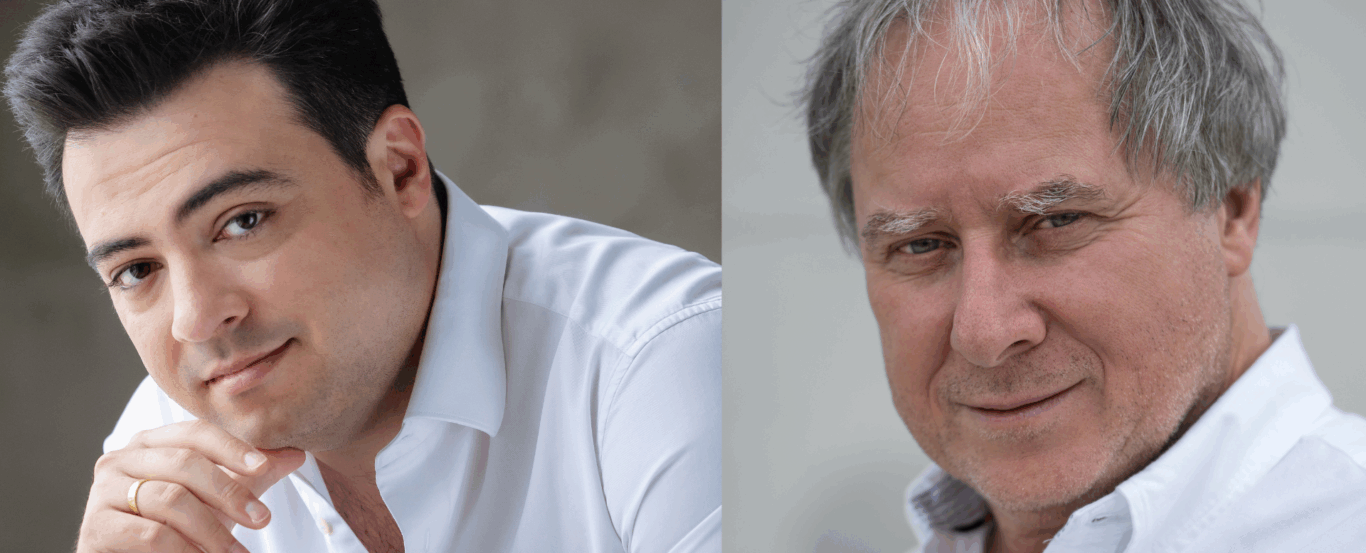
Ernő Kállai (violin), Elemér Balázs Jr., János Balázs (piano)

Kállai Quartet: Ernő Kállai, Géza Szajkó (violin), Kálmán Dráfi Jr. (viola), István Balázs (cello)

Host: Kálmán Dráfi


The Cziffra Festival and the Liszt Museum’s joint exhibition aims to showcase the piano training provided by the Liszt Academy, a straight line that can be traced through four generations from Liszt to the university’s piano professors of today. In connection with this, this time the works of Dohnányi, one of the leading piano teachers of the 20th century, will be performed, including the Sonata for Violin and Piano in C-sharp minor, Op. 21, which was premiered in Vienna in 1912 and the composer himself played the keyboard part; and the Piano Quintet No. 1 in C minor, perhaps one of the most frequently performed pieces in Dohnányi’s oeuvre. The composition, designated Op. 1, is in fact a final exam piece, about which Brahms himself is reported to have said: “I could not have written it better myself.” The concert will be hosted by Kálmán Dráfi, who, as a student of György Cziffra and former teacher of János Balázs, artistic director of the festival, faithfully passes on the essence of his knowledge to generations of pianists.

Presented by: Cziffra Festival and Liszt Ferenc Memorial Museum and Research Centre

Supported by: the Prime Minister’s Office and the Bethlen Gábor Fund

Programme

Dohnányi: Sonata for Violin and Piano in C-sharp minor, Op. 21

Dohnányi: Piano Quintet No. 1 in C minor, Op. 1

Előadások

   There is currently no date for this event.
World-Class Stars at the Cziffra Festival

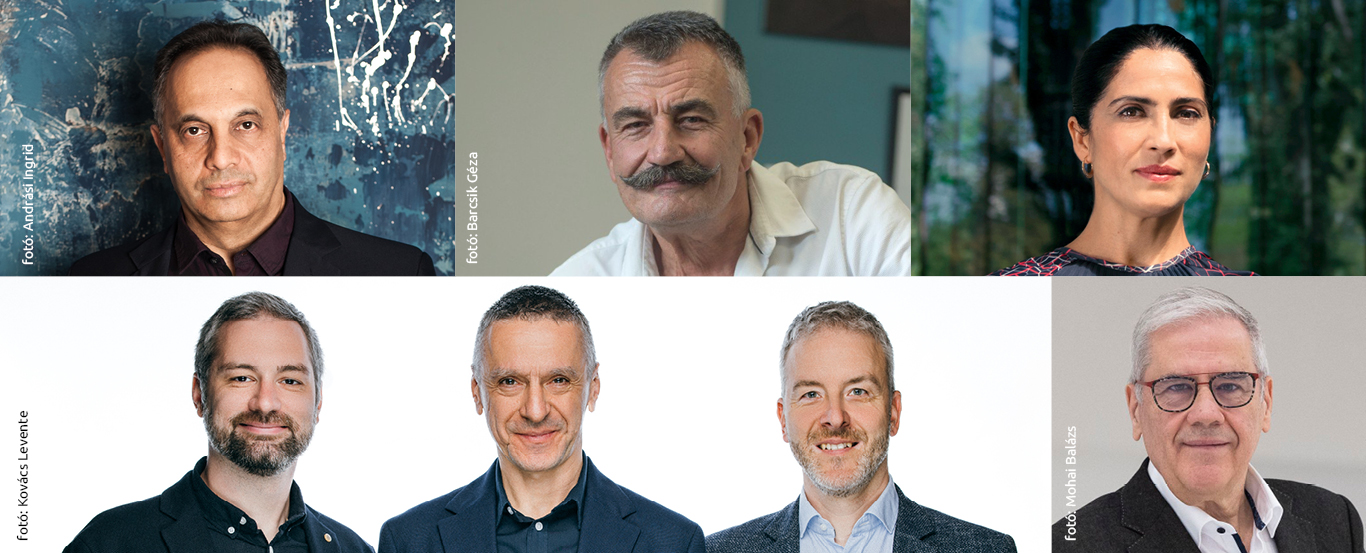
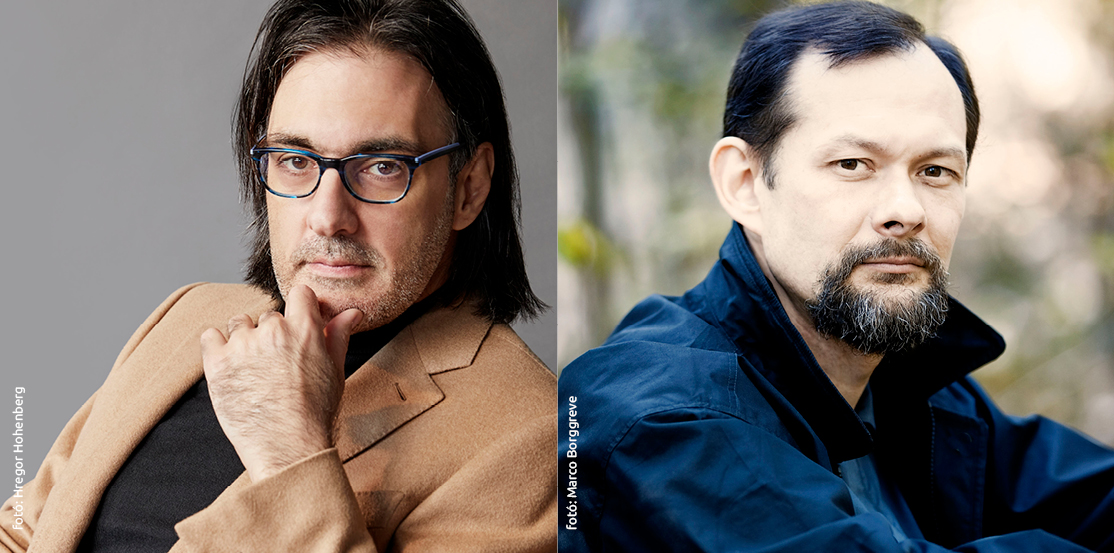
Leonidas Kavakos and Enrico Pace

As part of the Cziffra Festival, audiences have the rare opportunity to witness the collaboration of two legendary artists, Leonidas Kavakos and Enrico Pace—a partnership that, without exaggeration, elevates everything we thought we knew about chamber music to a new level. It is by no means self-evident that two outstanding musicians, even when each is a supreme master of their own instrument, can achieve such profound and finely nuanced unity as Kavakos and Pace have demonstrated through their many concerts and recordings.

Leonidas Kavakos’s playing is a unique combination of technical brilliance and deep emotional expressiveness, while under Enrico Pace’s hands the piano is never intrusive, yet always a confident, intelligent, and sensitive partner to the violin. Together, they engage in an intimate musical dialogue in which every note carries meaning.

Supporters of the Cziffra Festival:
Ministry of culture and Innovation, National Cultural Fund

Featured Sponsor: MVM

Programme

Mozart: Violin Sonata No.21 in E minor, K.304

Shostakovich: Violin Sonata in G major, Op.134,

Schubert: Rondo in B minor, D.895 ‘Rondeau brillant’

Stravinsky: Divertimento

The concert duration is approximately 110 minutes, including one intermission (Part I: approx. 50 minutes, Part II: approx. 40 minutes).

Előadások

   There is currently no date for this event.

János Balázs Piano Recital

János Balázs is a highly accomplished Hungarian pianist who began his career at the age of 16, having won the Franz Liszt International Piano Competition. He has received numerous international awards, including the ECHO Rising Star and Young Steinway Artist titles, and has been recognised in Poland for performing all of Frédéric Chopin’s works. Balázs is a permanent jury member for several prestigious competitions and has released over 15 albums. He is dedicated to performing and recording the works of contemporary Hungarian composers, particularly László Dubrovay’s complete piano pieces. His solo recital programme pays tribute to the legendary 20th-century Hungarian pianist, György Cziffra. Balázs is set to promote Cziffra’s life’s work and artistic legacy as widely as possible, with a programme ranging from emblematic works of Romantic piano literature to contemporary Hungarian music. The programme opens with Chopin and features works by the recently deceased Péter Eötvös and János Balázs’s close friend, László Dubrovay. The first three pieces draw inspiration from water, as seen in works by Chopin, Liszt and Strauss. This is followed by a Wagner paraphrase and one of Liszt’s most famous works: the Dante Sonata, frequently performed by Cziffra. Next, Hungarian music and improvisation take centre stage. First, János Balázs will perform an improvisation based on Hungarian folk music motifs. This is followed by character pieces by the aforementioned world-famous contemporary Hungarian composers. The evening will conclude with Liszt’s 6th Hungarian Rhapsody, inspired by Hungarian Gypsy music, a particular favourite of György Cziffra’s.

Supporter: Ministry of Culture and Innovation Hungary

Programme

Chopin: Barcarolle in F-sharp major, Op. 60

Liszt: The Fountains of the Villa d’Este

Strauss–Cziffra–Balázs: The Blue Danube (Paraphrases)

Wagner-Liszt: Isolde’s Liebestod

Liszt: Dante Sonata S. 161

Balázs: Improvisation on Hungarian folk songs

Eötvös: Dances of the Brush-Footed Butterfly

Dubrovay: Swallow Songs

Liszt: Hungarian Rhapsody No. 6

Előadások

   There is currently no date for this event.
The Freedom of Music

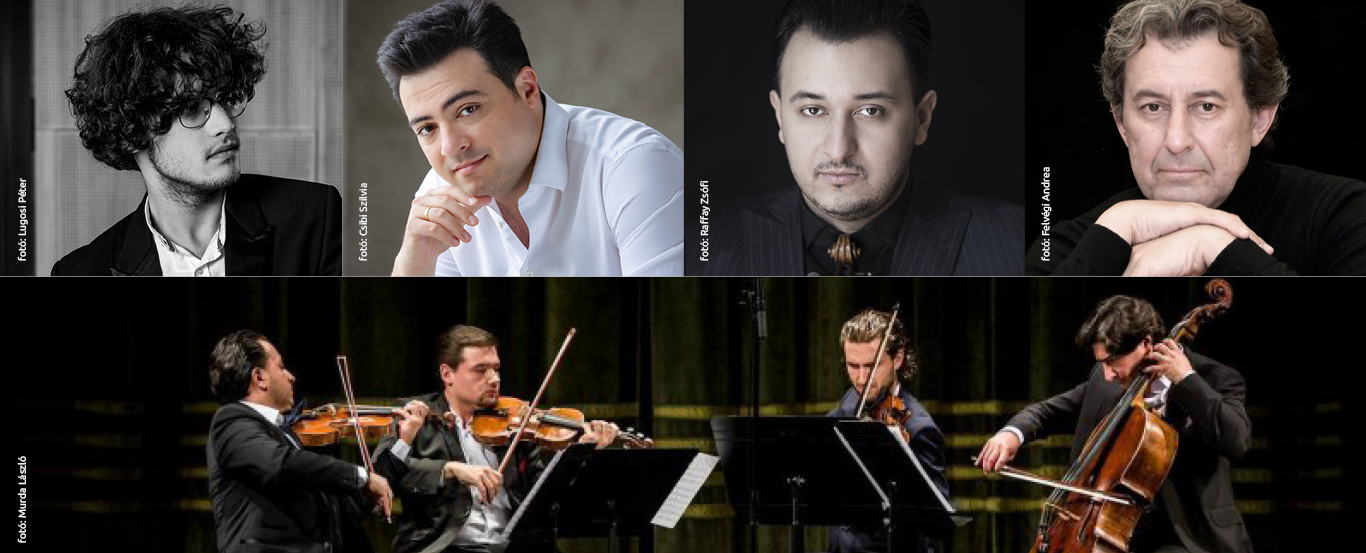
János Balázs piano recital

János Balázs is a highly accomplished Hungarian pianist who began his career at the age of 16, having won the Franz Liszt International Piano Competition. He has received numerous international awards, including the ECHO Rising Star and Young Steinway Artist titles, and has been recognised in Poland for performing all of Frédéric Chopin’s works. Balázs is a permanent jury member for several prestigious competitions and has released over 15 albums. He is dedicated to performing and recording the works of contemporary Hungarian composers, particularly László Dubrovay’s complete piano pieces. His solo recital programme pays tribute to the legendary 20th-century Hungarian pianist, György Cziffra. Balázs is set to promote Cziffra’s life’s work and artistic legacy as widely as possible, with a programme ranging from emblematic works of Romantic piano literature to contemporary Hungarian music. The programme opens with Chopin and features works by the recently deceased Péter Eötvös and János Balázs’s close friend, László Dubrovay. The first three pieces draw inspiration from water, as seen in works by Chopin, Liszt and Strauss. This is followed by a Wagner paraphrase and one of Liszt’s most famous works: the Dante Sonata, frequently performed by Cziffra. Next, Hungarian music and improvisation take centre stage. First, János Balázs will perform an improvisation based on Hungarian folk music motifs. This is followed by character pieces by the aforementioned world-famous contemporary Hungarian composers. The evening will conclude with Liszt’s 6th Hungarian Rhapsody, inspired by Hungarian Gypsy music, a particular favourite of György Cziffra’s.

A joint concert of the Cziffra festival and the Liszt Institute Brussels. 

Supporter: Ministry of Culture and Innovation Hungary

Free admission, registration:  https://forms.gle/DWC948hQ1mVVAypo7

Programme

Chopin: Barcarolle in F-sharp major, Op. 60

Liszt: The Fountains of the Villa d’Este

Strauss–Cziffra–Balázs: The Blue Danube (Paraphrases)

Wagner-Liszt: Isolde’s Liebestod

Liszt: Dante Sonata S. 161

Balázs: Improvisation on Hungarian folk songs

Eötvös: Dances of the Brush-Footed Butterfly

Dubrovay: Swallow Songs

Liszt: Hungarian Rhapsody No. 6

Előadások

   There is currently no date for this event.
János Balázs Piano Recital

János Balázs is a highly accomplished Hungarian pianist who began his career at the age of 16, having won the Franz Liszt International Piano Competition. He has received numerous international awards, including the ECHO Rising Star and Young Steinway Artist titles, and has been recognised in Poland for performing all of Frédéric Chopin’s works. Balázs is a permanent jury member for several prestigious competitions and has released over 15 albums. He is dedicated to performing and recording the works of contemporary Hungarian composers, particularly László Dubrovay’s complete piano pieces and works by the recently deceased Péter Eötvös. His solo recital programme pays tribute to the legendary 20th-century Hungarian pianist, György Cziffra. Balázs is set to promote Cziffra’s life’s work and artistic legacy as widely as possible, with a programme ranging from emblematic works of Romantic piano literature to contemporary Hungarian music. The programme begins with Chopin’s Ballade, followed by compositions by Liszt and Strauss reflecting the motif of water. The recital continues with a Wagner paraphrase and one of Liszt’s most celebrated works, the Dante Sonata, frequently performed by Cziffra. Next, Hungarian music and improvisation take centre stage. First, János Balázs will perform an improvisation based on Hungarian folk music motifs. This is followed by character pieces by the aforementioned world-famous contemporary Hungarian composers. The evening will conclude with Liszt’s 6th Hungarian Rhapsody, inspired by Hungarian Gypsy music, a particular favourite of György Cziffra’s.

A joint concert of the Cziffra Festival and the Liszt Institute New York.

Supporters:

Prime Minister’s Office of Hungary, Bethlen Gábor Fund, and the Ministry of Culture and Innovation of Hungary.

Programme

  • Chopin: Ballade no 3. in A flat major, op.47
  • Liszt: Les jeux d’eaux à la Villa d’Este
  • Strauss–Cziffra–Balázs: An der schönen blauen Donau (Paraphrases)
  • Wagner-Liszt: Isolde’s Liebestod
  • Liszt: Après une Lecture de Dante: Fantasia quasi Sonata
  • Balázs: Improvisation on Hungarian folk songs
  • Peter Eötvös: Dances of the Brush-Footed Butterfly
  • László Dubrovay: Swallow Song
  • Liszt: Hungarian Rhapsody No. 6

Előadások

   There is currently no date for this event.

David Fray piano recital

It is a rare occasion when the world-renowned French pianist David Fray — often dubbed the enfant terrible of the instrument — gives a solo recital in Budapest. Fray is recognized as one of the most influential Bach interpreters of our time, known for his dazzling, sometimes even shocking virtuosity that captivates audiences around the globe.

This evening’s program, part of the Cziffra Festival, begins in the Baroque era — a period of experimentation and the crystallization of musical norms — but presents Bach’s well-known works through the lens of the 20th century, thanks to arrangements by August Stradal, Samuil Feinberg, and Wilhelm Kempff.

While Fray places great emphasis on fidelity to the score, creativity is equally central to his artistry. From this unique blend emerges a level of virtuosity that perfectly aligns with the musical legacy represented by the Cziffra Festival.

In the first half of the concert, the French Baroque makes an appearance through works by Couperin and Rameau, culminating in three sonatas by the Neapolitan-born Scarlatti. And since the theme is experimentation, the finale gives voice to Richard Wagner — the great reformer, or perhaps fulfiller, of German art born of Bach’s legacy — whose musical visions are here reimagined through the language of the piano, in transcriptions by Franz Liszt and Hans von Bülow.

David Fray appears by arrangement of Arabella Arts. www.arabella-arts.com

The Cziffra Festival is supported by the Prime Minister’s Office, the Bethlen Gábor Fund Management Ltd., and the Ministry of Culture and Innovation.

Programme

Bach–Kempff: Siciliano, BWV 1031
Handel: Suite in B-flat major, HWV 434
Handel–Kempff: Minuet in G minor
Pancrace Royer: Vertigo
Bach: Violin Sonata in A minor, 3rd movement, BWV 1003
Scarlatti: Sonata in D minor (K 1), Sonata in F minor (K 466), Sonata in B minor (K 87)
Bach–Feinberg: Organ Sonata in C major, 2nd movement (Largo), BWV 529
Bach–Stradal: Organ Sonata in E minor, 2nd movement (Andante), BWV 528
Couperin: Les Barricades mystérieuses
Rameau: La Rappel des Oiseaux
Bach–Kempff: Cantata Overture, BWV 29

Wagner: Sonata for MW
Wagner–Bülow: Prelude (from Tristan und Isolde)
Wagner–Liszt: Isolde’s Liebestod

Előadások

   There is currently no date for this event.

Hommage a Cziffra 104

Miklósa Erika - José Cura - Balázs János

Programme

The unique and innovative collaboration between Erika Miklósa and János Balázs, and the onstage magic they create together, has become not only a signature feature of the Cziffra Festival but also a distinctive highlight of Hungary’s classical music scene in recent years. There could be no more fitting occasion to further deepen their musical and artistic partnership than the birthday of the festival’s namesake—a highly anticipated annual event dedicated to preserving and celebrating the intellectual and musical legacy of György Cziffra.

This special evening, focused on the interplay between opera, the soprano voice, and the piano, will be enriched by the presence of Argentine tenor José Cura, whose unique musical style expands and complements the original concept, opening up new artistic perspectives. A versatile vocal artist, Cura is also known to Hungarian audiences as a conductor and composer. He has previously shared the stage with Erika Miklósa, and has performed in chamber partnership with János Balázs as part of the festival—but the three of them have never appeared together in this configuration. Their new collaboration and the South American colors woven into the program promise an exceptional musical journey—not only for the performers but for the audience as well.

The Cziffra Festival Awards will be presented at the beginning of the concert.

The Cziffra Festival is supported by the Prime Minister’s Office, the Bethlen Gábor Fund, and the Ministry of Culture and Innovation.

Előadások

   There is currently no date for this event.

Youth in Focus / Ildikó Rozsonits – piano recital

The Cziffra Festival, celebrating its 10th jubilee year in 2025, is coming to  Brussels this year with two special concerts to introduce the young stars of classical music. This evening, the audience will meet Ildikó Rozsonits, a young pianist who gained admission to the School for Exceptional Young Talents of the Liszt Ferenc Academy of Music at just ten. Her musical career has been soaring high ever since: In 2022, she was awarded the Junior Prima Award, and in 2024, she won the Creative Artist Award of the Cziffra Festival. In the framework of the Talentum Hungaricum programme, she continues to learn and improve her skills under János Balázs’ mentorship. The Cziffra Festival aims to support young talents and provide them with the opportunity to make an international debut. “Talent management is a very multifaceted undertaking, and we strive to cover as many aspects of it as possible,” said János Balázs, the festival’s Artistic Director. These evenings not only provide an exceptional musical experience but also give the audience a chance to meet the most promising young artists of the future of classical music. 

(Joint concert of the Cziffra Festival and the Liszt Institute Hungarian Cultural Centre Brussels) 

Funded by the Prime Minister’s Office, the Gábor Bethlen Fund and the Ministry of Culture and Innovation

Előadások

   There is currently no date for this event.

Alexa Stier and Noémi Sallai

Crossroads: Hungarian Music in Conversation with the World

Hailed for her “colorful, flexible and expressive playing” (Res Musica), pianist Alexa Stier has performed extensively in Europe, the United States and in South America. Alexa is a prizewinner of the Olivier Messiaen International Piano Competition, the Orléans International Piano Competition, and the George Enescu International Piano Competition and the founder and artistic director of ContemporArt Chamber Music Festival. Alexa holds diplomas from the Royal Conservatoire of Scotland and the Yale School of Music, where she is currently a doctoral candidate.

Hungarian clarinetist Noémi Sallai, praised for her „smooth fluency” by The Milbrook Independent, was selected as the sole clarinet fellow in Carnegie Hall’s prestigious music program, Ensemble Connect for the 2018-2020 season. A multiple prize winner in national and international competitons in Italy, Hungary, Slovenia and the United States, Ms. Sallai has spent her summers at the Crescendo Summer Institute, the Sarasota Music Festival and the Norfolk Chamber Music Festival, and appeared as a clarinetist in renowned groups such as the Budapest Festival Orchestra and the Orpheus Chamber Orchestra. Ms. Sallai holds a Master of Music degree from The Juilliard School of Music and a Bachelor of Music and Bachelor of Arts degrees from Bard College. Ms. Sallai currently serves as the Cultural Attaché of the Liszt Institute Hungarian Cultural Center New York.

Joint concert of the Cziffra Fesztival and the Liszt Institute New York.

Supported by: The Prime Minister’s Office, Bethlen Gábor Fund, Ministry of Culture and Innovation

Programme

Béla Bartók (1881-1945): Three Hungarian Folksongs from Csík, Sz. 35a

  1. The Peacock. Rubato
  2. At the Jánoshdia fairground. L’istesso tempo
  3. White lily. Poco vivo


Gergely Vajda (1973 – ): Lightshadow Trembling for solo clarinet

György Kurtág (*1926): Selections from “Játékok” (Games), Volume V.

Jubilate

The Little Squall (for Zoltán Kocsis)

Bells for Margit Mándy


Béla Kovács (1937 – 2021): Hommage á DeFalla for solo clarinet


Béla Bartók: Piano Sonata, BB 88, Sz. 80

  1. Allegro moderato
  2. Sostenuto e pesante
  3. Allegro molto


Luigi Bassi (1833-1871): Concert Fantasia on Motives from “Rigoletto” for Clarinet and Piano


Robert Schumann (1810-1856): Piano Sonata no. 2, op. 22

  1. So rasch wie möglich
  2. Andantino. Getragen
  3. Scherzo. Sehr rasch und markiert
  4. Rondo. Presto possible, Prestissimo, quasi cadenza


Rezső Kókai (1906-1962): Four Hungarian Dances for Clarinet and Piano

  1. Recruiting Dance
  2. Folk Dance
  3. Mourning Dance
  4. Fresh

Előadások

   There is currently no date for this event.